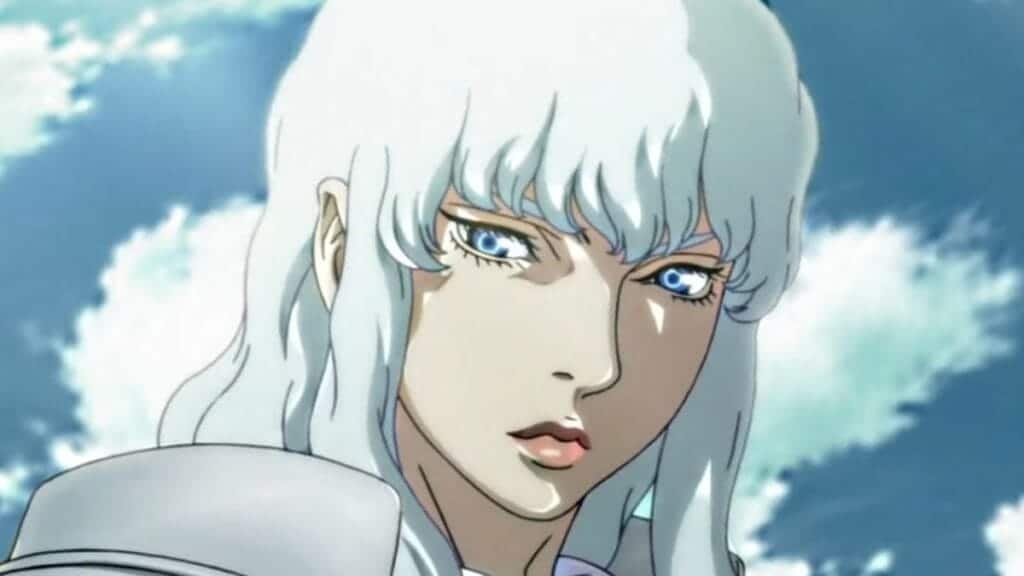
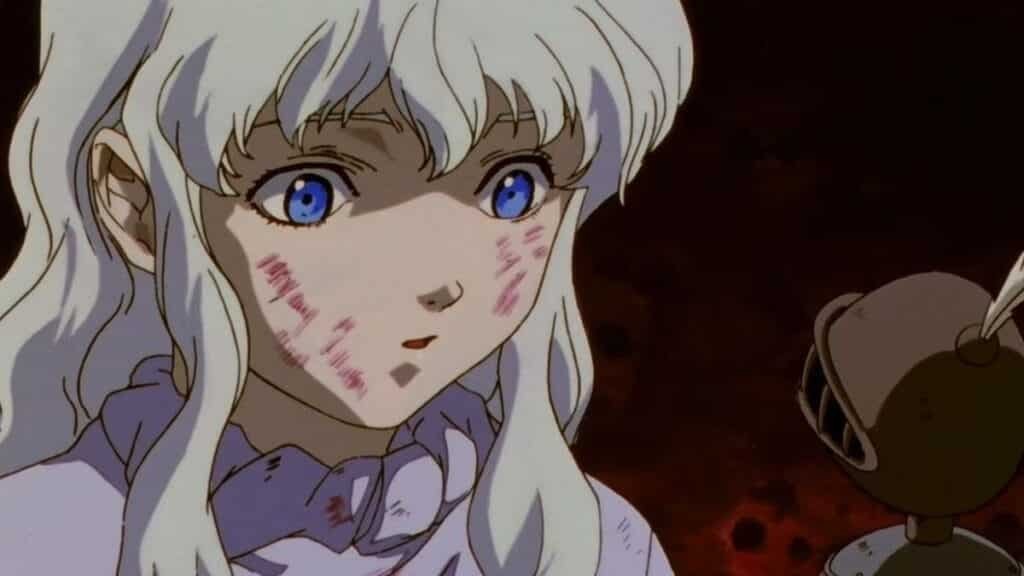
Ask manga readers to name the most hated villain of all time and one name comes up again and again: Griffith. In Kentaro Miura’s Berserk, the leader of the Band of the Hawk is beautiful, brilliant and adored by everyone around him, and then, in a single moment, he sells out every person who ever loved him. Yet decades later, fans still cannot stop arguing about him. Some call him pure evil, others half-jokingly insist that “Griffith did nothing wrong”. Why does one character inspire so much hatred and so much fascination at the same time? Let’s look at both sides.
The Perfect Leader
The genius of Griffith begins long before the Eclipse. During the Golden Age arc, he is written as the ideal commander, and the reader falls under his spell as easily as his soldiers do.
- A dream bigger than himself: Born so poor that he sometimes went without bread, Griffith grew up staring at a distant castle and swore to one day have a kingdom of his own.
- Charisma and courage: He fights on the front line, plans battles to keep losses low and wins the impossible siege of Doldrey, ending the Hundred-Year War for Midland.
- Personal sacrifice: He even sells his body to the nobleman Gennon to pay for his men’s equipment, a choice that already hints at how much he is willing to give up for the dream.
Many readers point out that his early image is almost too bright. Every page he appears on seems to glow, and that radiance hides how coldly calculating he can be. He is less a pure hero than a classic ambitious founder of dynasties: visionary, magnetic and willing to use people.
Cracks Beneath the Armour
The Speech About Friendship
Early in the story, Griffith explains to Princess Charlotte what a true friend means to him: not someone who serves another man’s dream, but someone with a dream of his own, an equal. By that standard, none of his soldiers qualifies. They are his comrades and his tools, but not his friends. Guts overhears this, and it eventually pushes him to leave the Hawks to find his own purpose.
The Collapse
Guts’s departure is the first time Griffith loses control. Beaten in a duel and abandoned by the one person he valued, he slips into Charlotte’s room that same night, a reckless act that ends with him imprisoned and tortured for a year. When the Hawks finally rescue him, he is a broken shell, unable to walk, hold a sword or even speak. His kingdom is gone, his body is ruined, and his friends now pity him.
The Eclipse – Why He Is So Hated
Then comes the Eclipse. The Crimson Behelit summons the God Hand, and Griffith is offered his dream back at the price of the people he cares about. After seeing the endless pile of corpses he had already stepped over on the way to his castle, he gives the answer that made him infamous: “I sacrifice.”
What follows explains the hatred better than any essay:
- The ultimate betrayal: The Hawks, who bled for him and risked everything to save him, are branded and devoured by apostles in front of his eyes.
- The crime against Casca: Reborn as Femto, his first act is to assault Casca while Guts is forced to watch, a moment many readers consider the darkest scene in manga.
- No remorse: Later, standing among the graves of the soldiers he sacrificed, Griffith calmly says he feels nothing at all.
- He wins: Unlike most villains, he is not punished. He returns to the physical world, saves Midland as the “Falcon of Light”, and is worshipped as a saviour in his new capital, Falconia.
That last point matters. Readers hate villains who get away with it, and Griffith has spent decades of real-world serialisation getting away with it.
Why He Is Still So Fascinating
The Dream as a Prison
A popular interpretation argues that Griffith’s dream was never purely a desire. It was also a crushing pressure. Every soldier who died for him became another body on the road to the castle, and stopping would mean all of them had died for nothing. Seen that way, the Eclipse is not a sudden turn to evil but the final step of a path he could never leave without becoming one more corpse himself.
The Only Person Who Made Him Forget
The second layer is Guts. Griffith is rational in everything except where Guts is concerned. In his last human moments during the Eclipse, he admits to himself that Guts was the only one who ever made him forget his dream. Many fans read the Eclipse as the moment Griffith destroyed the one bond that threatened his ambition, and his jealousy toward Guts and Casca as the only time he truly lost his composure.
Not a Change, but an Unmasking
Another common reading is that the Eclipse did not transform Griffith at all; it simply removed the mask. His charm, his kindness and his care for his men were always real, but always secondary to the castle. The same man who once reminded Guts that he knows exactly what kind of person Griffith has always been never pretended otherwise.
A Mirror of Human Ambition
Finally, Griffith is terrifying because he is believable. He does not want to destroy the world; he wants to build a better kingdom, with the cost paid by others. That kind of ambition, admirable from afar and monstrous up close, exists in real history and real people. It is why some readers defend him and why everyone else finds that defence so disturbing.
Conclusion
Griffith is manga’s most hated villain because his betrayal is personal, cruel and unpunished, aimed at the very people who loved him most. He is also its most fascinating one because Berserk lets us understand exactly how a dreamer reaches that point, and because his ambition is something every reader recognises.
Is Griffith a monster who chose evil, or a man consumed by a dream he could never escape? And when Guts finally confronts him again, what kind of ending could ever feel like justice?