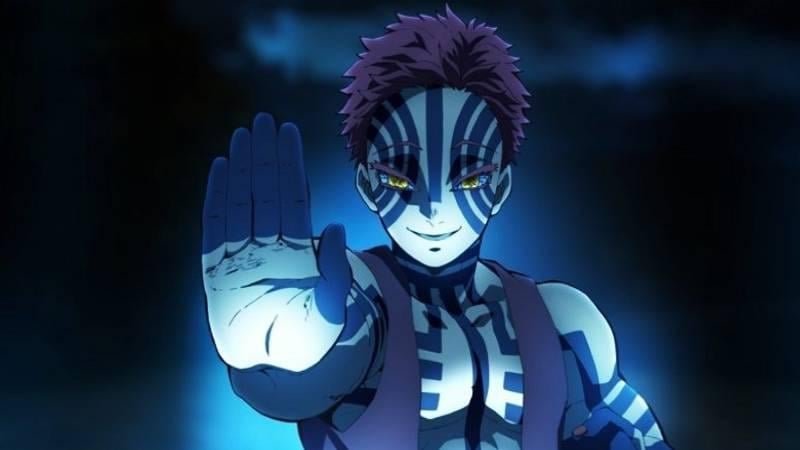
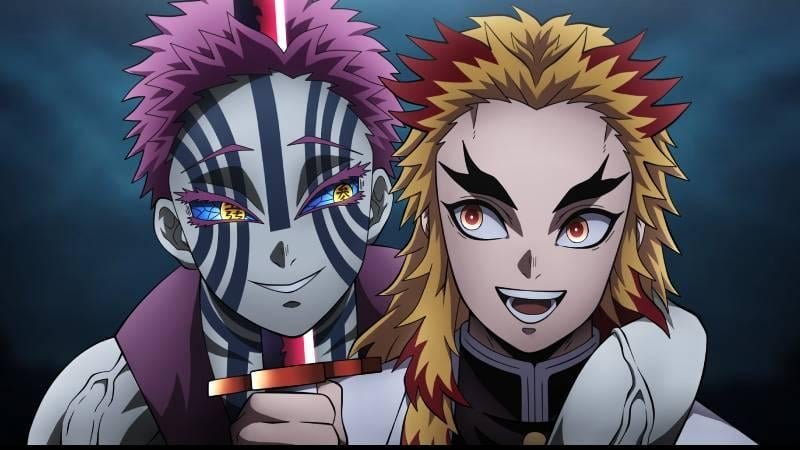
When Akaza crashes into the end of the Mugen Train arc, he seems like the purest kind of villain in Demon Slayer: a smiling, bare-fisted monster who kills Kyojuro Rengoku and calls the weak a disease that nature should weed out. Yet when his story is finally told during the Infinity Castle battle, Upper Moon Three turns out to be one of the saddest characters Koyoharu Gotouge ever wrote. His human name was Hakuji, and almost everything about the way Akaza fights is a broken echo of that life. Let’s look at Hakuji’s past and how it shaped the demon he became.
Hakuji – A Boy Who Stole for His Father
More than a century before Tanjiro’s time, in the Edo period, Hakuji lived in poverty with his bedridden father. They could not afford medicine, so the boy became a pickpocket. He was caught again and again, beaten by officials and marked with the tattoos that branded criminals, yet he kept stealing, convinced that any punishment was worth it if his father recovered.
His father could not bear it. Unwilling to live on stolen money, he hanged himself and left Hakuji a letter asking him to live an honest life while he still could. Hakuji was then banished from Edo, alone, angry and with nowhere to return.
Keizo, Koyuki and a Second Chance
The Soryu Dojo
Wandering as a street brawler, Hakuji beat seven grown men with his bare hands. That fight drew the attention of Keizo, the master of a small, struggling dojo of Soryu, an unarmed martial art. Keizo knocked the boy flat, then invited him home: he would teach Hakuji Soryu, and in return Hakuji would help care for his sick daughter, Koyuki.
Hakuji had already spent years nursing his father, so looking after Koyuki came naturally. Training with Keizo and living with the two of them slowly healed him. For the first time, someone treated the criminal kid as family.
The Fireworks Promise
Koyuki grew healthier, and her feelings for Hakuji grew too. One night, under a sky full of fireworks, they promised each other a future: Hakuji swore to become stronger and protect her for the rest of his life. Soon after, Keizo asked him to marry Koyuki and take over the dojo, and Hakuji, who had never expected to be allowed a normal life, accepted.
The Poisoned Well
While Hakuji travelled to his father’s grave to tell him about the wedding, a rival sword dojo that wanted Keizo’s land, and that could never beat Keizo or Hakuji in a fair fight, poisoned the dojo’s well. Keizo and Koyuki both died. Hakuji came home to find that the people he had sworn to protect were gone, killed by cowards while he was away.
What followed was a massacre. Hakuji stormed the rival dojo and killed sixty-seven of its trained swordsmen with his bare hands, so brutally that Muzan Kibutsuji first assumed a demon had done it (Chapter 155). Muzan found the young man wandering in despair, pushed his blood into him, and Hakuji, with no reason left to resist, became Akaza, losing every memory of the people he had loved.
Why Upper Moon Three Fights the Way He Does
Akaza forgot Hakuji, but his body and habits never did. Many fans describe his whole fighting style as a corrupted memorial to his human life:
- Bare fists, never weapons: His Blood Demon Art, Destructive Death, is built on the Soryu style Keizo taught him. He fights with nothing but his hands and feet, like the human who once defended a dojo of unarmed fighters.
- The snowflake compass: When he activates Compass Needle, a snowflake-shaped pattern spreads beneath his feet (first seen in Chapter 63). Its shape mirrors Koyuki’s hairpin, and “yuki” in her name means snow.
- Fireworks for technique names: The names of his later techniques come from types of Japanese fireworks, a quiet reference to the night of his promise.
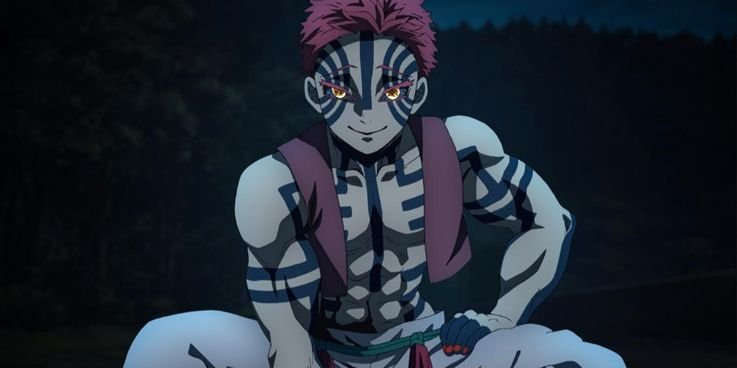
- The stripes on his body: The bands covering Akaza’s skin recall the criminal tattoos the young Hakuji received for every theft.
- He never eats women: Despite knowing it would make him stronger, Akaza refuses to kill or eat women, a rule rooted in his buried memory of Koyuki. It even slowed his growth as a demon.
Hatred of the Weak, Love of the Strong
Akaza’s famous contempt for weakness looks like simple cruelty, but in light of his past it reads very differently. The weak person he truly hated was himself: the boy who could not save his father, and the man who was not there when his master and his fiancée needed him most. In his twisted reasoning, weak people are those who fail and let others die.
That is also why he respects strong fighters so much, and why he invites gifted fighters like Rengoku to become demons so that their strength would never fade with age. And it explains his rage when Tanjiro calls him a coward at the end of the Mugen Train fight: being compared to the kind of people who poison a well was the one insult he could not tolerate.
Remembering Hakuji
Akaza’s final fight comes in the Infinity Castle, against Tanjiro and Giyu. Tanjiro learns to erase his own fighting spirit, the very thing the Compass Needle reads, and takes Akaza’s head. Yet the demon’s body keeps going, driven by his obsession with strength, until the memories return: his father, Keizo and Koyuki, calling him back. Hakuji finally chooses to stop and turns his own power on himself, letting go of the demon instead of becoming something even worse.
Many readers consider this one of the most emotional villain endings in the series, precisely because Akaza is not redeemed by winning, but by remembering.
Conclusion
Akaza fights the way he does because Hakuji never truly disappeared. The unarmed style, the snowflake compass, the fireworks, the stripes, his mercy toward women and his loathing of weakness all point back to the boy who stole medicine for his father and the young man who promised to protect Koyuki forever.
With the first Infinity Castle film set to open in Japanese theatres on July 18, anime fans are about to see Hakuji’s story on screen for the first time. When they do, will Akaza still be the demon who killed Rengoku in their eyes, or will he become the most tragic soul in Demon Slayer?