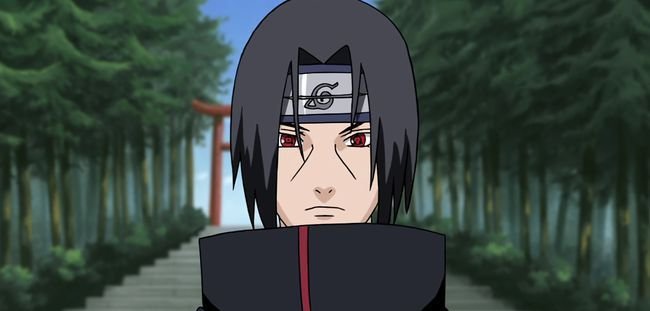
Few characters in Naruto have been judged as many times as Itachi Uchiha. For half the story he is the cold genius who murdered his entire clan and left his little brother alive only so that he could suffer. Then the truth comes out, and the same man is suddenly a loyal spy who sacrificed everything for his village. Fans have argued ever since: was Itachi a hero, a villain, or simply a victim of the system that raised him? The honest answer is that the story gives strong evidence for all three. Let’s look at each case.
The Night That Defined Him
The facts first. In a single night, Itachi killed every member of the Uchiha clan except Sasuke, including his own parents. He then let Sasuke find him standing over the bodies, trapped him in Tsukuyomi to relive the massacre again and again, and told him he had done it to test his own abilities. If Sasuke wanted revenge, he should cling to life, hate his brother, and come back when he had the same eyes. Itachi then left the Hidden Leaf and joined the Akatsuki.
For years, that was the whole story. When Itachi returns to the village with Kisame, he defeats Kakashi with Tsukuyomi and later breaks Sasuke again without much effort. He looks every bit the cold, untouchable villain.
The Truth Behind the Massacre
After Itachi’s death, Tobi tells Sasuke what really happened, and later chapters fill in the rest:
- A child of war: Itachi lived through the Third Shinobi World War at the age of four. Seeing that much death turned him into a pacifist who wanted to end fighting altogether (Chapter 400).
- A clan on the edge: After the Nine-Tails attack, the village leadership suspected the Uchiha and moved them to the edge of the village. Resentment grew into a plan for a coup.
- A double agent: His father sent him into the ANBU to spy for the clan, but Itachi reported the clan’s plans to the Third Hokage and the council instead, hoping for a peaceful solution (Chapter 400).
- The last hope fails: His best friend Shisui planned to stop the coup with his eye technique, Kotoamatsukami, but Danzo stole one of his eyes. Shisui gave the other to Itachi, asked him to protect the village and the Uchiha name, and took his own life.
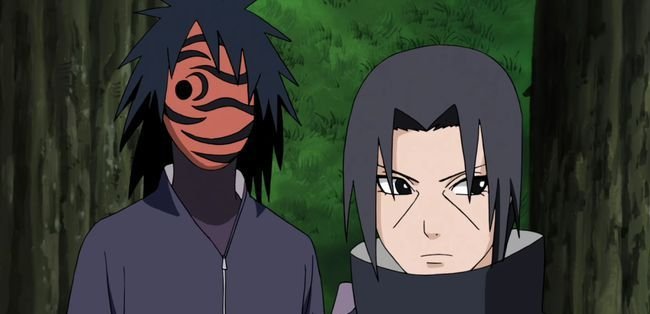
- The impossible choice: Danzo gave Itachi an order: wipe out the clan with his own hands, and Sasuke would be spared. Itachi accepted, with the masked man he believed to be Madara as a partner (Chapter 590).
- The cover: Leaving as a criminal was part of the mission. In the Akatsuki, he kept watch over the organisation for the village (Chapter 401), and he warned Danzo that he would leak the Leaf’s secrets if anyone ever touched Sasuke.
The Case for Itachi the Hero
- He prevented a war: A coup by the village’s police clan could have triggered a civil war and invited other nations to attack. Itachi stopped it at the cost of his name, his family and his future.
- He protected Sasuke to the end: Every lie he told was meant to keep Sasuke alive and, eventually, to let him become the hero who killed the clan’s murderer.
- He never betrayed the Leaf: Many fans point out small hints in his first return to the village. He could have killed Kakashi but only incapacitated him, and his visit came right after the Third Hokage’s death, a timely reminder to Danzo and the elders that Sasuke’s protector was still alive.
- He saved the world after death: Revived by Kabuto during the Fourth Shinobi World War, he broke free of the jutsu’s control, helped Naruto stop Nagato, and then, alongside Sasuke, trapped Kabuto with Izanami and ended the reanimation jutsu.
- The highest praise: After learning everything Itachi endured, Hashirama Senju himself considers him a greater shinobi than he was (Chapter 620).
The Case for Itachi the Villain
A noble motive does not erase what Itachi did, and many readers insist on remembering it.
- The forgotten victims: The Uchiha clan was not only plotters. There were elders, children and families who knew nothing about the coup. In most discussions they become faceless background to Itachi’s sacrifice, but they were people.
- Cruelty toward Sasuke: Trapping a child in Tsukuyomi to relive his parents’ deaths is psychological torture, whatever the reason. Itachi shaped Sasuke into an avenger, and that path led Sasuke to Orochimaru, to the Akatsuki and nearly to attacking the Leaf itself.
- Working with the real enemy: He helped the masked man carry out the massacre and later served in the Akatsuki, an organisation hunting the tailed beasts.
- He admitted it himself: In his final moments with Sasuke (Chapter 590), Itachi confesses that he decided everything alone and that, by never trusting his brother with the truth, he failed him.
A popular way to sum this up is that Itachi had the ideals of a hero but the methods of a villain. That makes him less an anti-hero than an anti-villain: someone who does terrible things in the belief that they will lead to something good.
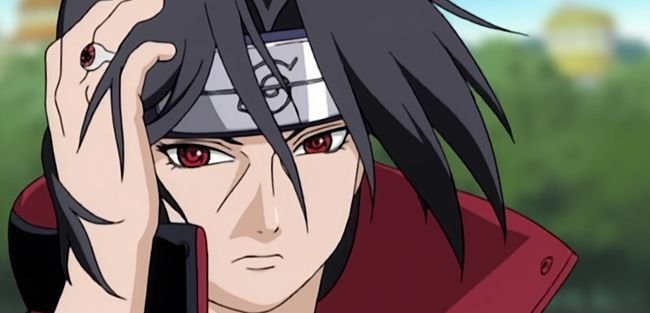
The Case for Itachi the Victim
Step back from his choices, and another picture appears. Itachi was a child soldier. He saw war before he could read properly, joined the ANBU at eleven (Chapter 220), and was barely a teenager when the village’s leadership placed a clan’s survival in his hands. The people who should have solved the crisis, the Third Hokage, the council and Danzo, instead handed the dirtiest possible job to a boy and let him carry the blame for the rest of his life.
Even his own body betrayed him. He developed a terminal illness and kept himself alive with medicine and sheer will, only so that Sasuke could be the one to kill him (Chapter 401). His parents, in their last moments, told him they were proud of him and asked him to look after Sasuke. Every part of his life was sacrificed to other people’s decisions and conflicts.
So Which One Was He?
Itachi does not fit neatly into any single box, and that is exactly why he has lasted so long as a fan favourite. Seen from the village, he was a hero who never received credit. Seen from the Uchiha, he was the man who destroyed them. Seen from his own life, he was a gifted boy crushed between a paranoid government and a desperate clan. His final words to Sasuke, “I will love you always,” are the line of a man who finally stopped lying, not of a saint.
Conclusion
Itachi Uchiha was all three at once: a hero in purpose, a villain in method and a victim of the world that shaped him. The true tragedy is that he only understood his biggest mistake, carrying everything alone, after it was too late to fix.
What is your verdict? Is Itachi the greatest hero of the Hidden Leaf, a murderer the story forgave too easily, or a child who never stood a chance?