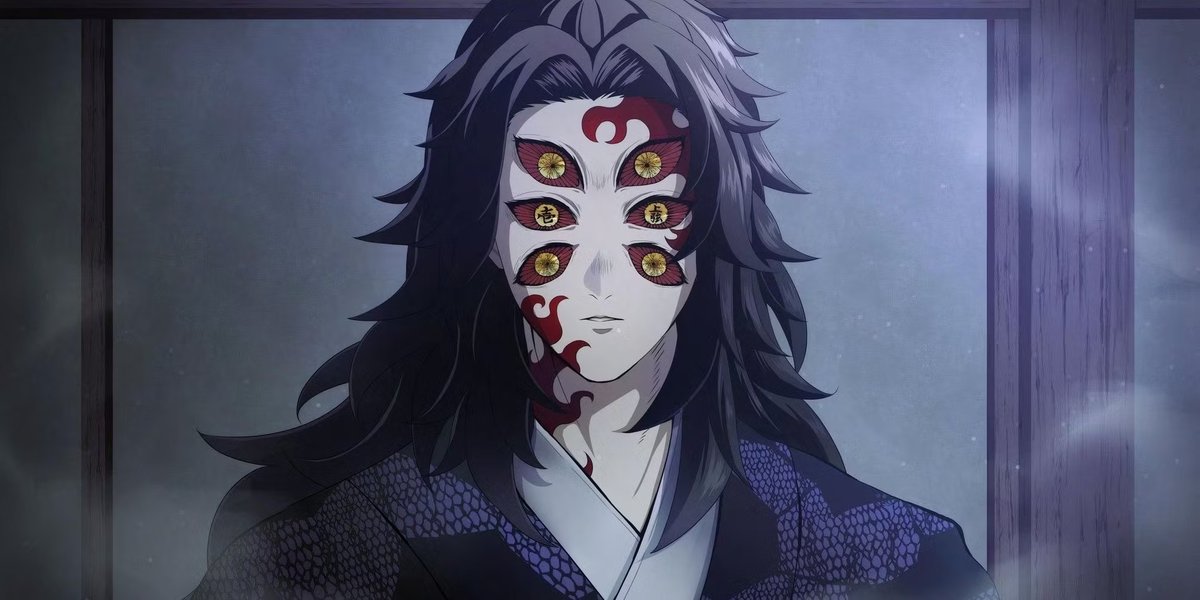
Kokushibo sits at the very top of Muzan’s Twelve Kizuki. He is Upper Moon One, a six-eyed swordsman who has held his rank for centuries and who fights with a blade grown from his own flesh. Yet when Demon Slayer finally reveals his past, the most frightening demon in the series turns out to be a man who spent four hundred years running from one person: his twin brother, Yoriichi Tsugikuni. Why is Kokushibo’s story often called the saddest in the series, and what exactly went wrong between the Tsugikuni brothers? Let’s walk through his life and why it hurts so much.
Who Was Michikatsu Tsugikuni?
Before he was Kokushibo, he was Michikatsu, the elder son of a samurai family in the Sengoku era. As a human he was one of the original Breathing users alongside Yoriichi, and his Moon Breathing came from his attempt to copy his brother’s Sun Breathing. As a demon he still sees the “transparent world” and wears the Demon Slayer Mark on his face. His full past is told in Volume 20 of the manga, mostly in Chapter 177 (“Younger Brother”) and Chapter 178.
Twins Born Under a Bad Omen
Two Brothers, Two Lives
In their era, twins were seen as a bad omen that would split a house over succession, and Yoriichi was also born with a strange mark on his forehead. Their father wanted to kill him. Only their mother’s fury saved him, and a deal was made: Yoriichi would live in a tiny back room and be sent to a temple at age ten. The brothers had different rooms, clothes, food and education. Michikatsu pitied the silent boy who never left their mother’s side, and secretly gave him a small flute he had made, telling him to blow it if he ever needed help.
The Day Everything Flipped
Yoriichi did not speak until he was seven, and everyone assumed he was deaf. His first words were to Michikatsu: was his dream to become the strongest samurai in the land? Yoriichi wanted to be the second strongest, right behind him. Soon after, a trainer handed Yoriichi a bamboo sword as a joke, and the seven-year-old knocked the grown man down with four blows in an instant, something Michikatsu had never managed once. Yoriichi could see muscles, bones and blood flow inside his opponent. And then he said he would rather play sugoroku and fly kites with his brother than talk about swords.
For Michikatsu, this was unbearable. He had given everything to the sword; his brother had a gift that dwarfed his and did not even care. When the family learned of Yoriichi’s talent, the roles were about to reverse: Yoriichi would become heir and Michikatsu would be the one sent away. Then their mother died, and Michikatsu realised Yoriichi had not been clinging to her out of weakness at all. He had been holding up her failing body. Yoriichi left home that same night, taking the flute with him.
The Sun and the Moon
Ten quiet years passed. Michikatsu married, had children, and became a samurai. Then a demon wiped out his camp, and the man who saved him was Yoriichi, now a master swordsman and, in Michikatsu’s eyes, a faultless person. The old jealousy returned at full strength. Michikatsu abandoned his wife and children to join the Demon Slayers, determined to make his brother’s strength his own.
He awakened the Mark, but never learned Sun Breathing; Moon Breathing was as close as he got. Then the marked swordsmen began to die, and it became clear that the Mark trades a user’s life for power: none of them live past 25. With no future left in which to catch up, Michikatsu accepted Muzan’s offer of eternal life. Many fans point out how cruel the timing is: Yoriichi himself would go on to live past eighty.
The Duel He Could Never Win
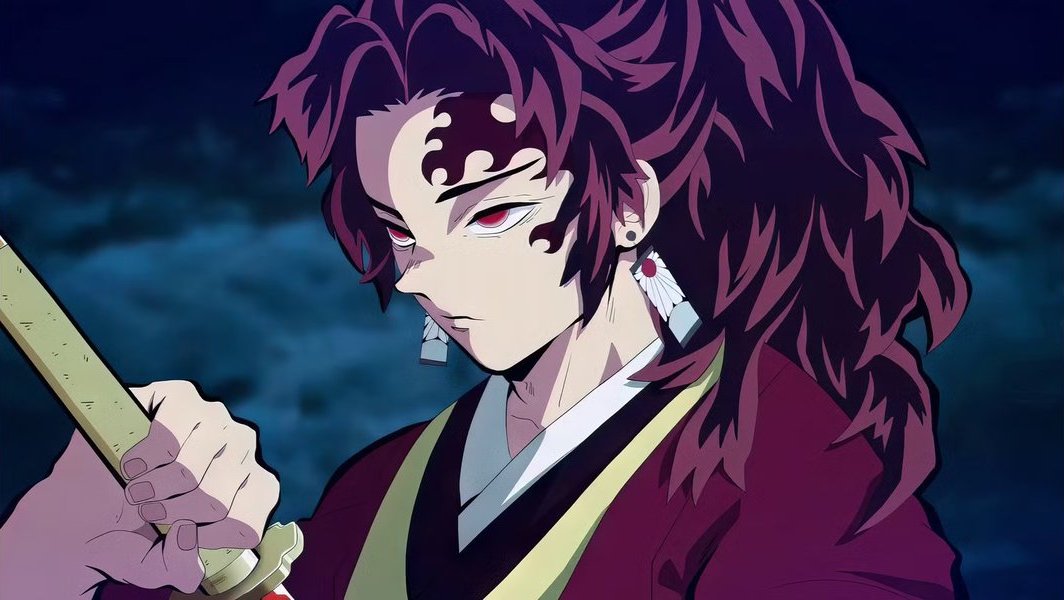
Sixty years after becoming a demon, Kokushibo met his twin again. Yoriichi was an old man, yet he still drew his sword, and he wept for his brother, the first time Michikatsu had ever seen him show emotion. Yoriichi was a single strike away from taking Kokushibo’s head when his life ran out and he died standing. Kokushibo had technically survived, but he knew he had lost, and now he could never win. In his rage he cut the body in two, and out fell the old flute. Yoriichi had kept the crude toy his entire life.
A Monster in the Mirror
Centuries later, in the Infinity Castle, Kokushibo faces Gyomei, Sanemi, Genya and his own descendant, Muichiro. He is beheaded in Chapter 175, refuses to accept it, and regenerates into a grotesque body covered in blades. Then he sees his reflection in Sanemi’s sword (Chapter 176). Is this what a samurai looks like? He hears the boy Yoriichi’s old words behind him, and admits that he did not become a demon simply out of fear of death. He wanted to be Yoriichi. As his body crumbles, the only thing left behind is the flute, which he had carried for four hundred years.
Why His Story Hurts So Much
Faith, Not Just Jealousy
One popular reading argues that Michikatsu never really looked at the real Yoriichi at all. He worshipped an image of him: Yoriichi as the perfect “way of the sword.” Everything in his life was measured against that image, even his mother’s death, which in his memory is only about envy and fear of being sent to the temple. Meanwhile the real Yoriichi kept asking for one simple thing: time with his big brother.
- Two failures to communicate: Michikatsu cannot see anything beyond his obsession; Yoriichi cannot put his love into words. Each is the most important person in the other’s life, and neither ever says so clearly.
- The wrong person to ask: His final question, why was he ever born, is addressed to the brother who carried his flute for a lifetime. Fans note that the series answers this question elsewhere, when Muichiro insists he was born to be happy.
An Unreliable Narrator
Another reading goes further: Michikatsu’s memories are designed to make himself look small. He remembers looking down on his brother, envying him, thinking only of himself. Yet Yoriichi’s own memory, revealed later, describes his brother as kind, the boy who always looked out for him. Seen this way, what Michikatsu called hatred may have been guilt, and what he ran from was not Yoriichi’s talent but Yoriichi’s love. A god can be chased and hated; a younger brother who simply adores you cannot.
Fear of Losing
Many fans also stress that his greatest fear was not death but defeat. Even immortal, he could not escape a brother who beat him one last time by dying. Yoriichi once told him they were only a fragment of human history and that future generations would surpass them (Chapter 175). Michikatsu could never accept it, and it is exactly those future generations who finally bring him down.
Conclusion
Kokushibo’s tragedy is not that he was weak; he was one of the greatest swordsmen who ever lived. It is that he measured his whole existence against someone else, threw away his family, his humanity and his name, and still ended with nothing but a little flute and a question only his brother could answer. Was Michikatsu destroyed by jealousy, by fear, or by a love he refused to accept?