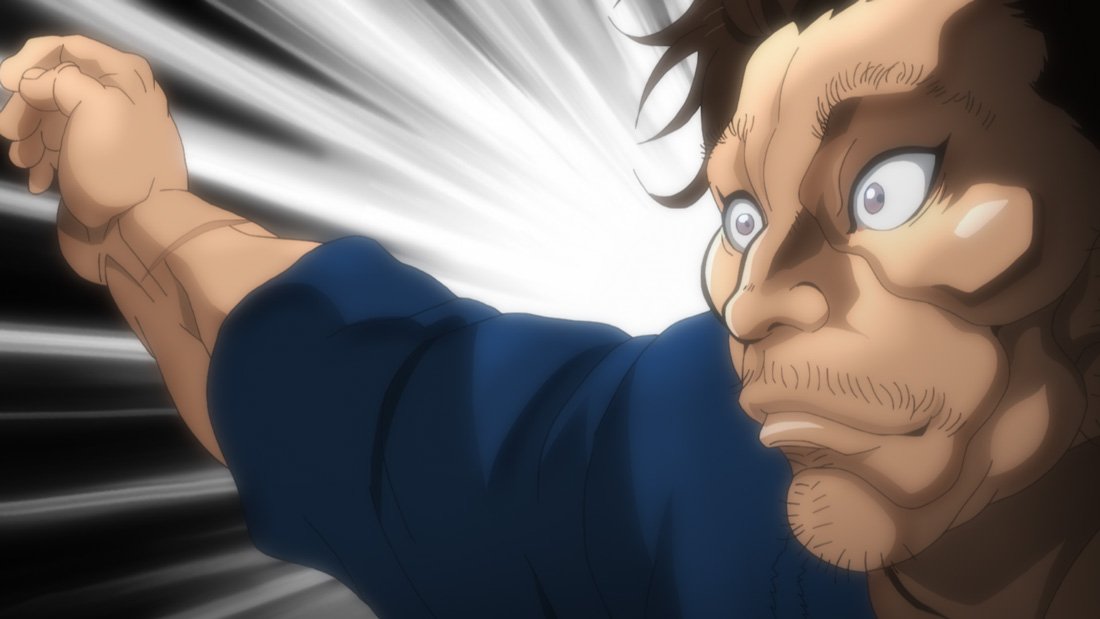
After Baki finally faced his father, the Baki series had a problem: what do you do once the story’s central goal is done? Keisuke Itagaki’s answer, in Baki-Dou (2014–2018, 22 volumes), was one of the wildest ideas in fighting manga. Clone Japan’s most famous swordsman, Musashi Miyamoto, call his soul back from the afterlife, and let him loose on the modern world. The arc killed a beloved character, turned a running joke into a hero and split the fanbase down the middle. So did the cloned-swordsman arc actually work? Let’s look at what happened and what both sides of the debate argue.
How Musashi Came Back
Baki-Dou opens with the strongest fighters in the series yawning. They have become so strong that nothing threatens them anymore, and boredom has set in. Mitsunari Tokugawa, the billionaire who runs the underground arena, has a solution prepared. Beneath the Tokyo Skytree he has built a secret laboratory, and his scientists use DNA taken from Musashi’s remains to grow a perfect adult clone. The body, however, is empty. To fill it, Tokugawa calls on his sister, a powerful spirit medium, who summons the real Musashi’s soul into it, memories and skills included.
The result is not a respectful museum piece. This Musashi is proud, hungry for fame and completely at ease with killing. He wants the glory he once had, and the modern world’s champions look to him like a feast laid out on a table.
The Path of Destruction
Musashi’s run through the cast is what most readers remember:
- The Imitation Cut: He can “cut” an opponent with intent alone. A kendo master facing him feels himself slashed several times before a single move is made, and gives up on the spot.
- Baki and Doppo: Both challenge him unarmed and both are knocked out. Musashi meets their rules with equal force and spares them.
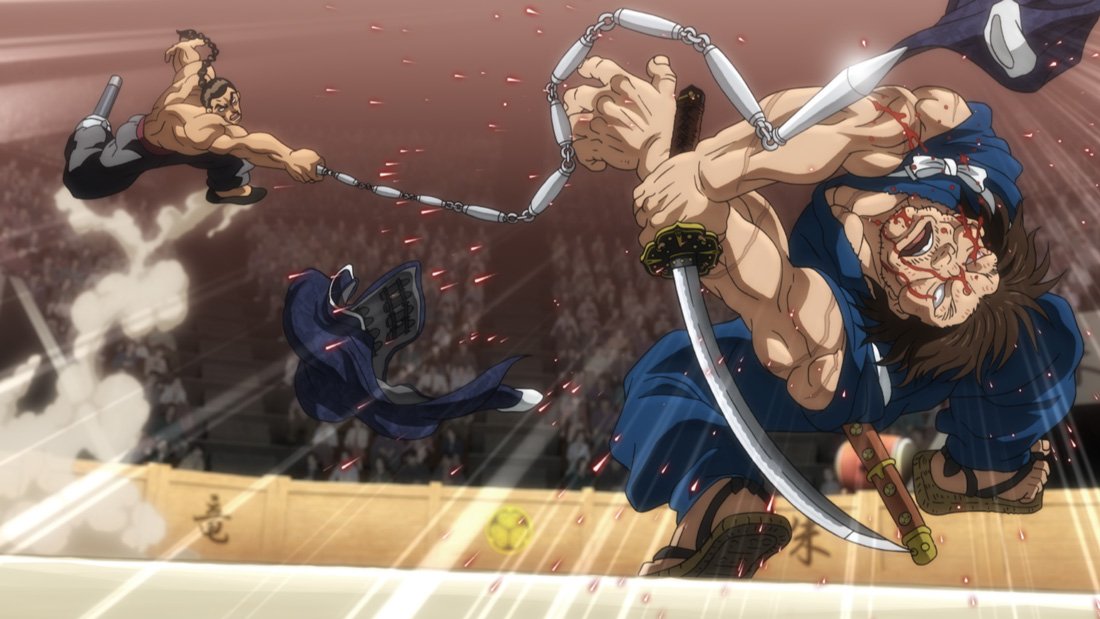
- Retsu Kaioh: Retsu fights him with weapons in the arena, and Musashi, now with a real sword, cuts him down. One of the most popular characters in the franchise dies for real.
- Yujiro Hanma: The clash everyone wanted ends without a clear result, with the two shown as roughly even.
- Pickle: Even the prehistoric giant is slashed again and again until, for once, he runs away in fear.
- The modern world: When the police try to stop him, Musashi kills officers without hesitation, and the authorities end up turning to the yakuza Kaoru Hanayama for help.
The Case Against the Arc
Retsu’s Death
For many fans, the arc never recovered from Retsu. Killing a long-time favorite to prove how dangerous the new villain is felt like a shock tactic, and plenty of readers simply could not believe the series had actually done it.
An Unstable Musashi
Critics also point to how inconsistent Musashi feels. During the Yujiro fight he suddenly declares that fighting without a sword, the “no-sword” ideal, is the highest state, then picks his blades back up, then returns to the no-sword idea against Baki. To these readers, the character never settles into a clear philosophy, and many fights end in an unsatisfying way, the Yujiro bout above all.
The Motobe Problem
The biggest complaint is Izou Motobe. For decades he had been the series’ commentator, the old jujutsu man who explains other people’s fights. In Baki-Dou he suddenly becomes a major force, beats Jack Hanma, insists that only he can protect his friends from Musashi, and then actually defeats him with weapons and dirty tricks. The arc gave him so much space that fans joked it should be called “Motobe-Dou.” And yet, after all that, the story still ends with a Baki versus Musashi fight, which made Motobe’s victory feel strangely pointless to some readers.
The Case for the Arc
A Complete Story
Supporters argue that Baki-Dou is the most tightly built entry in the franchise. It starts with boredom, introduces the one man who can cure it, and ends by answering a question set up from the first chapter: what do you do with someone who should never have come back? Unlike other parts of the series, it tells one continuous story from beginning to end.
No One Is Protected
Another popular defense is that the arc broke the series’ worst habits. Earlier entries had drifted into endless power inflation and seemed to shield their favorite characters. Here, Baki loses, Retsu dies, and even Yujiro is not shown as untouchably superior. Doppo returns to the simple strength of karate, and older characters are rebuilt instead of forgotten. Seen this way, the fights feel dangerous again.
Motobe Was the Point
Motobe’s rise also has its defenders. His whole philosophy is that a real fight to the death is not a sport, and athletes trained for rules have no place in it. Musashi is the perfect test of that idea, because he comes from an age when duels ended with a corpse. The commentator who looked like a joke turns out to be the one who understood combat best, which fits the arc’s theme of rediscovering what fighting really means.
A Lonely Man Out of Time
Some of the best moments are quiet ones. Pickle, another man pulled out of his own era, is the closest thing Musashi has to a kindred spirit. Later, hunted by the authorities, Musashi goes back to find Pickle where he hides underground. Neither can really talk to the other, yet the scene suggests that two people stranded in the wrong century understand each other without words.
What Musashi Really Meant
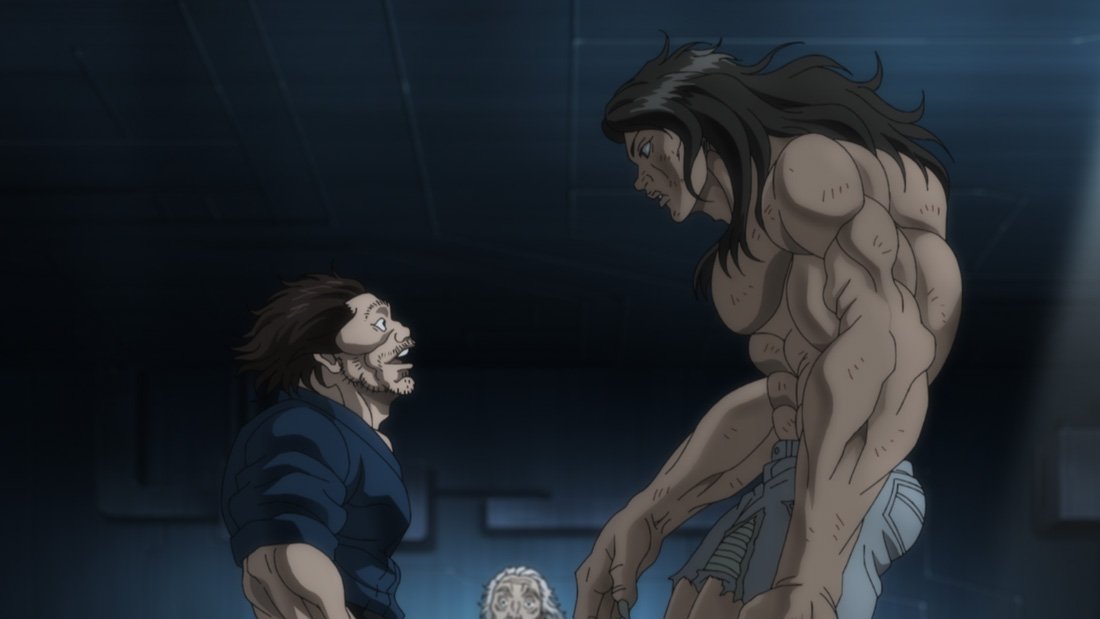
One of the most interesting readings treats Musashi as the ancestor of the very idea of “the strongest.” Every fighter in Baki is, in a sense, following a path that began with Musashi, but the Musashi they worship is a legend, not the real man. Bringing him back tests whether modern martial arts, with all their rules, still carry the reality of a life-or-death duel. Baki’s answer in the final fight is yes: modern fighting has absorbed that reality rather than lost it. In this reading, the “Dou” in the title is not the road ahead of Baki but the road fighters have walked since Musashi, now confirmed as the right one. In the end Musashi’s soul is sent back to the afterlife, and the modern world keeps its own way of fighting.
The arc has also found a second life. Netflix’s Baki-Dou: The Invincible Samurai brought it to anime in two parts in 2026, giving a new audience the chance to argue about Retsu and Motobe all over again.
Conclusion
Did the cloned-swordsman arc work? As pure spectacle, Musashi is one of the most frightening opponents the series ever produced, and the arc took real risks. As storytelling, it is messy: Retsu’s death, Musashi’s wavering philosophy and Motobe’s sudden rise still divide readers. Perhaps that is exactly why it is remembered. Was Baki-Dou a bold reinvention of the series, or the moment it went too far?