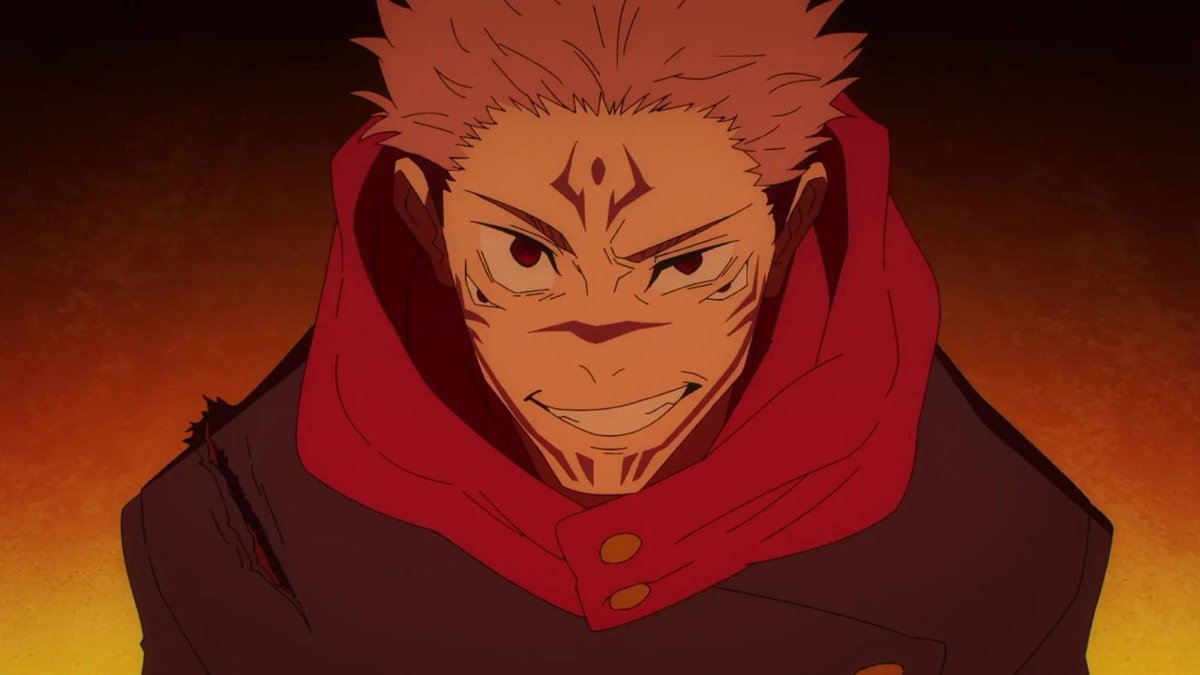
From the moment Yuji Itadori swallows a rotting finger in the first chapter of Jujutsu Kaisen, one presence hangs over the entire story: Ryomen Sukuna, the King of Curses. Many shonen villains are frightening because they are strong. Sukuna is frightening for several reasons at once: his power, his intelligence, his total lack of remorse and, by the end, the uncomfortable truth about why he became what he is. So what exactly makes the King of Curses so terrifying? Let’s break it down.
Who Is Ryomen Sukuna?
According to legend, Sukuna was an imaginary demon with four arms and two faces. In reality, as Gojo explains early on, he was a human sorcerer who lived more than a thousand years ago in the Heian era, the golden age of jujutsu. The sorcerers of his time challenged him together and lost. After death, his power survived in twenty indestructible fingers, each a special-grade cursed object. When Yuji eats one, he becomes Sukuna’s vessel, and Gojo, the strongest sorcerer alive, admits that a Sukuna with all his power back would be a bit of a struggle even for him.
The name itself comes from real Japanese history. The ancient chronicle Nihon Shoki describes a two-faced, four-armed figure called Sukuna in the province of Hida who plundered the people. Yet in Hida itself, several temples honour Ryomen Sukuna as their founder, and some historians read him as a local leader who was defeated and then written into history as a monster by the winners. Jujutsu Kaisen borrows that double image: a demon to some, a god to others.
Reason 1: Power That Breaks the Scale
Even with a single finger, Sukuna casually destroys cursed spirits that terrify trained sorcerers. His toolkit is simple to describe and horrifying to watch:
- Dismantle and Cleave: Invisible slashes. Dismantle cuts like a blade, while Cleave adjusts itself to the target’s toughness and cursed energy, so nothing is too hard to cut. At full strength these slashes split skyscrapers.
- Fire: A flaming arrow technique that he rarely shows, which makes it all the more frightening when he does.
- Malevolent Shrine: His Domain Expansion does not trap victims inside a barrier. It opens into the real world, like painting on thin air, and shreds everything within its range again and again.
One popular reading notes that his technique is really about cooking: slicing, cutting and fire, with a domain whose Japanese name contains the word for kitchen. For Sukuna, people are ingredients.
Reason 2: Shibuya, Where the Gloves Came Off
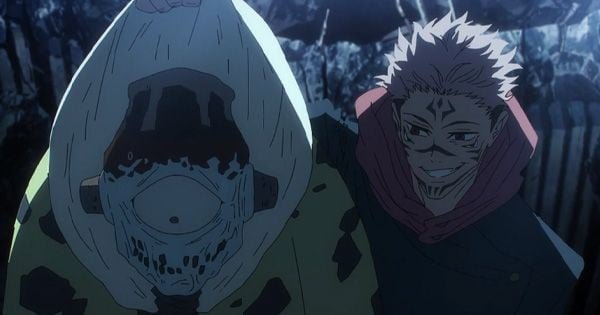
The Shibuya Incident is where readers, and later anime viewers in the show’s second season, truly saw what the King of Curses means. Forced to swallow ten fingers at once, Yuji loses control, and Sukuna wakes up with around fifteen of his twenty fingers.
Jogo
Jogo, a special-grade curse who had just flattened several sorcerers in seconds, challenges Sukuna and cannot land a single meaningful blow. Sukuna toys with him and then burns him with his fire. As Jogo fades, Sukuna tells him to stand proud because he was strong (Chapter 116). That moment of respect is almost more chilling than the fight itself: Jogo was strong, and it made no difference.
Mahoraga
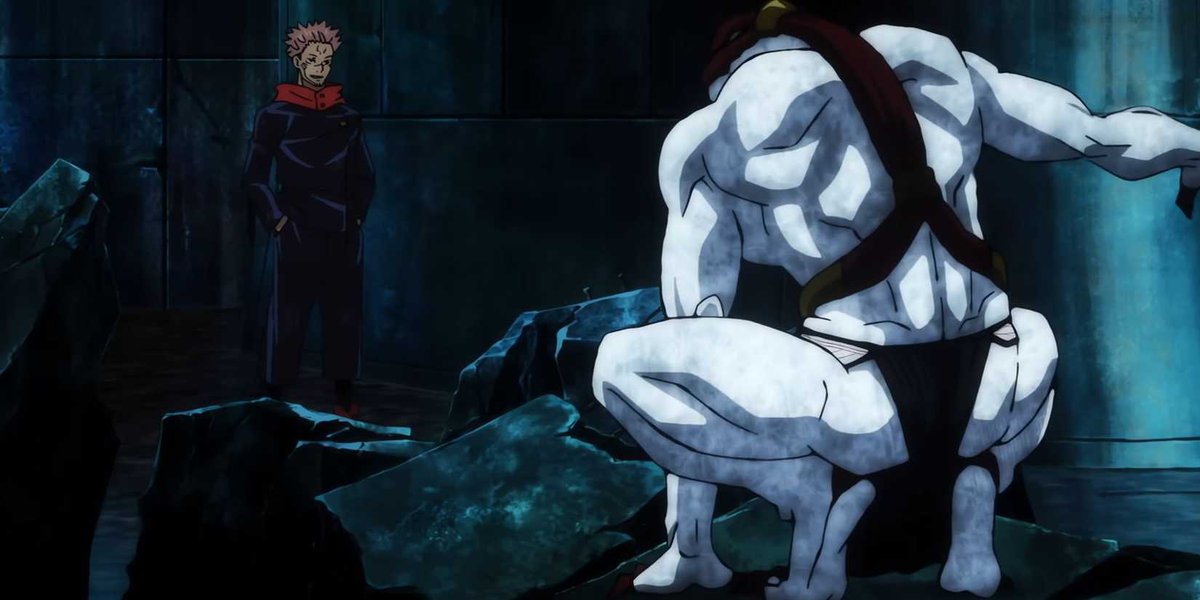
When Megumi summons Mahoraga, the most dangerous shikigami of the Ten Shadows technique, in a desperate move, Sukuna fights it for fun, then unleashes Malevolent Shrine over a huge area of the city. Countless people die simply because they were standing nearby. He does not hate them; they were in the way.
Reason 3: He Is Smarter Than You
Sukuna is not a mindless monster, and that may be the scariest part. Many fans argue that his true weapon is his mind:
- Manipulation: Early on he tears out Yuji’s heart to force him into a binding vow, then hides the terms of that deal for later.
- Patience: He waits a long time for the right moment, then uses that vow to slip into Megumi’s body (Chapter 212), gaining the Ten Shadows technique he had been interested in from the start.
- Adaptation: Against Gojo, he uses Mahoraga’s ability to adapt as a guide, learning how to cut through space itself, until a single slash ends the strongest sorcerer (Chapter 236). He then admits he will remember Gojo as long as he lives.
- Creativity: His use of binding vows and domain tricks is more inventive than anyone else’s in the series. He does not just overpower jujutsu; he understands it.
Reason 4: Evil Without Excuses
Most villains have a cause. Mahito explores cruelty out of curiosity, Geto chases a twisted ideal, Kenjaku pursues a cold experiment. Sukuna wants nothing that can be argued with. He does not want to reform the world or rule it. He eats, kills and amuses himself, and he says so openly. He compares humans to insects and cannot understand why the weak cling to life. There is no speech that could change his mind, because there is no position behind it, only appetite. Many readers see this honesty as the most unsettling thing about him: a pure force that simply acts according to its nature.
Reason 5: The Man Behind the King
And yet the ending complicates everything. Late in the manga, the story reveals that Sukuna was born a twin and ate his brother in their mother’s womb, and that this twin was reborn as Yuji’s grandfather (Chapter 257). The “cursed child” born deformed was looked down on by everyone around him, until his power turned their contempt into fear.
When Yuji, after everything, offers him one last chance and shows him pity, Sukuna is enraged. Mercy is the one thing he cannot bear. And after his defeat, in the passage of souls, he does not deny Mahito’s accusation that his whole way of life was revenge against those who scorned him. He even admits that, next time, he might try living differently (Chapter 271).
A popular reading takes this further: Sukuna chose to become exactly the monster people said he was. He was not born the King of Curses; he decided to be one, again and again, and he played the role to the very end. That may be the most terrifying idea of all, because it means a person did this.
Conclusion
Sukuna is terrifying on every level. His power breaks the scale, Shibuya showed what happens when he is let loose, his intelligence makes him impossible to outwit, and his evil comes without excuses. Underneath it all lies a scorned child who decided that being feared was better than being despised. Is the King of Curses scarier as a natural disaster with no reason, or as a man who chose to become one?